
Çanakkale Onsekiz Mart Üniversitesi
İnsan ve Toplum Bilimleri Fakültesi - Batı Dilleri ve Edb. Bölümü - İngiliz Dili ve Edebiyatı
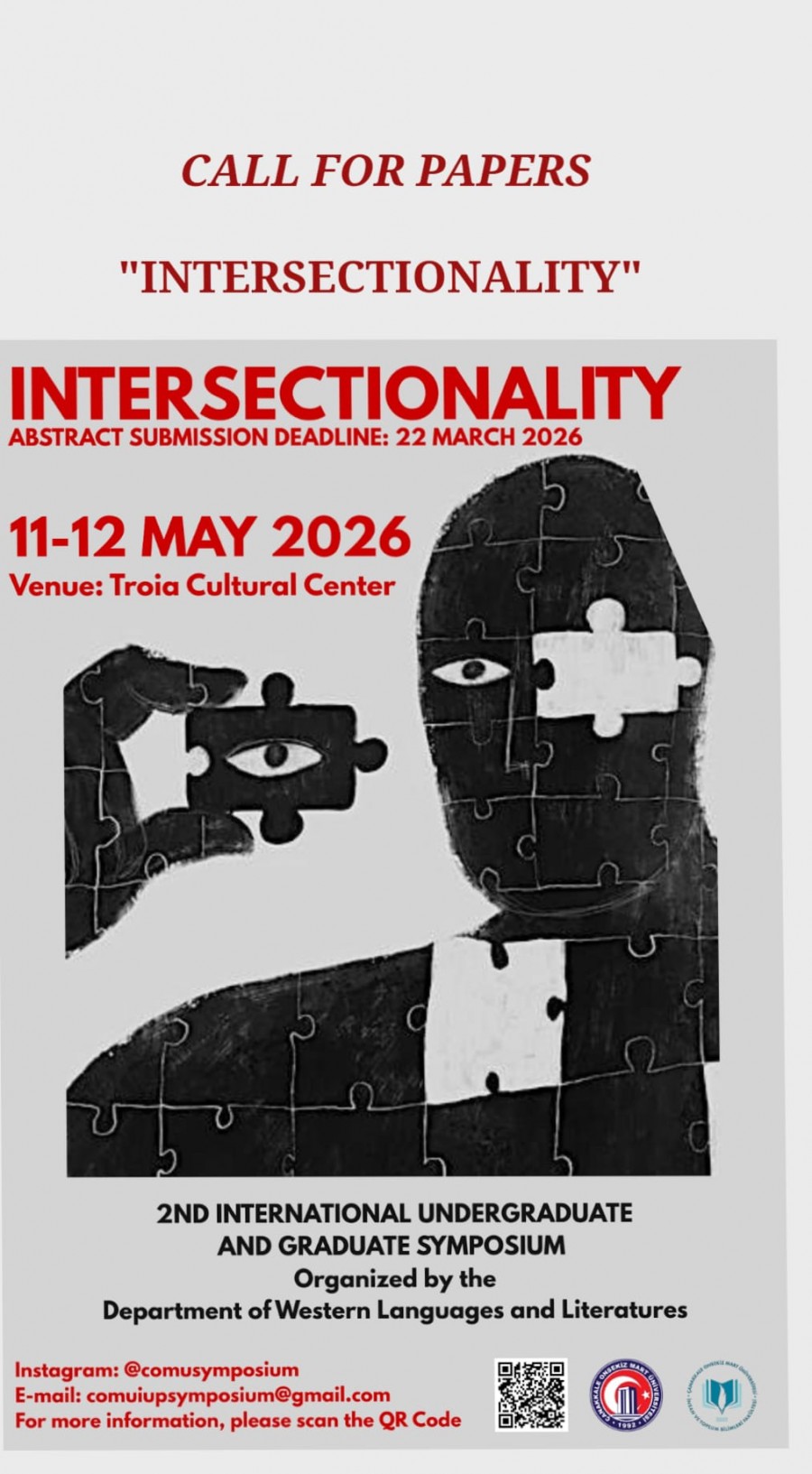
Troia Cultural Center, Çanakkale/Merkez
Since its conceptualisation by Kimberlé Crenshaw, intersectionality has become a critical framework for understanding how systems of power—such as race, gender, class, sexuality, ability, and nationality—interact to produce complex and overlapping forms of privilege and oppression. Far from being confined to any single discipline, intersectionality has emerged as a vital lens through which scholars, artists, and activists explore the entanglement of identities and structures in shaping lived experience.
This symposium seeks to bring together voices from across disciplines to engage in meaningful dialogue about how intersectionality continues to evolve in theory and practice. It invites participants to rethink traditional boundaries between the personal and the political, the cultural and the structural, the local and the global. By fostering conversation between the humanities, social sciences, natural sciences, and arts, the event aims to explore both the transformative potential and the ongoing challenges of intersectional thinking.
Participants are encouraged to reflect on how intersectionality illuminates questions of justice, representation, embodiment, and belonging in contemporary society. From literature and law to technology and environmental studies, the symposium offers a space to consider how intersecting identities shape not only individual experience but also the broader structures of knowledge, culture, and power.
We cordially invite you to participate in the Second International Undergraduate and Graduate Symposium by submitting an abstract of 250–300 words by 22 March, 2026. Please email your proposal, along with a brief bio (50–100 words), to comuiupsymposium@gmail.com.
Notification of accepted papers will be provided by 12 April, 2026. Kindly note that the language of the symposium is English, and presentations should not exceed 15 minutes. We look forward to your contributions to this exciting academic event.
The event is free of charge, and all participants will receive a certificate.
Topics for the presentations may include, but not limited to:
Interlocking systems of oppression: power, privilege, resistance
Global and transnational perspectives
Intersectionality in literature and visual culture
Intersectionality in policy, law, and education
Migration, borders, and intersecting identities
Intersectionality in the global market: class, race, and the capital
Intersectionality in the posthuman age
Health inequalities and intersectional disparities
Performance and visual art
Intersectionality in literature
Digital culture, surveillance, and identity formation
Childhood, education, and digital socialization